Mozaic Kitchen

Our Story

Mozaic Kitchen began in 2016, when many Syrian refugees arrived in the DMV area carrying exceptional culinary skills. Among them were professional baklava and halawet al-jibn chefs, pastry and bakery specialists, falafel masters, and many women whose home cooking reflected generations of tradition. While eager to work and support their families, they faced real barriers, including language limitations, lack of transportation, and childcare responsibilities.
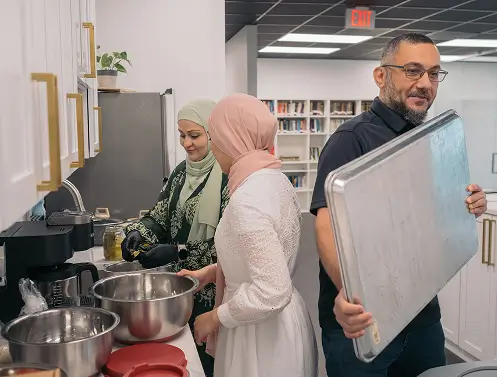
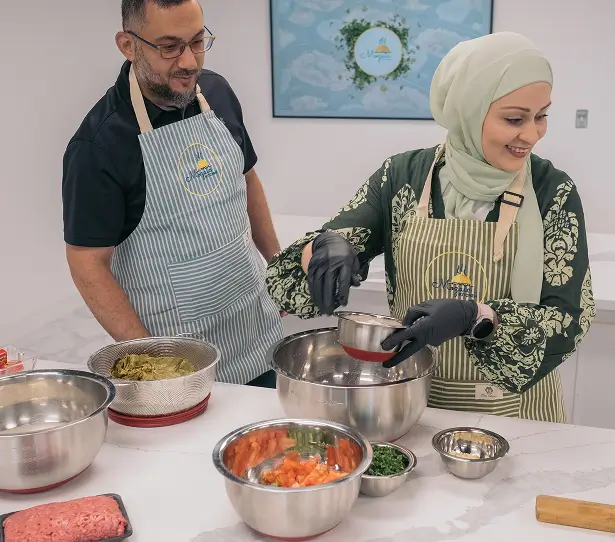
Mozaic responded by creating pathways rather than handouts. We started with food samplers, inviting refugee cooks to prepare their signature dishes so we could evaluate taste, presentation, and quality. Each sampler was followed by detailed feedback, and Mozaic team members worked side-by-side with participants in the kitchen—teaching food safety, sanitation, presentation, and American food industry standards. We supported chefs in sourcing cookware, ingredients, packaging, labeling, organizing deliveries, and showcasing their food at community bazaars.
The income generated proved transformative for families struggling to pay rent and facing the risk of eviction. As demand grew, Mozaic Kitchen developed a formal menu with pricing, expanded online marketing, and moved into a shared commercial kitchen. The founder obtained ServSafe certification, enabling Mozaic to train additional participants, secure required health department and agricultural permits, and graduate chefs who went on to pass the ServSafe exam themselves.
As the program matured, it entered an entrepreneurship phase, equipping participants with skills in cost management, customer service, and operations. Mozaic Kitchen launched large-scale initiatives such as Thanksgiving meals, meals for shelters, and food support for newly arrived refugees—gaining media attention, particularly when Syrian refugees prepared meals for Afghan refugees evacuated in 2021.
While shared kitchen spaces allowed for growth, they also revealed limitations, including high storage costs, restricted access for participants, and challenges in maintaining fully halal standards in communal environments. These experiences clarified the need for a more aligned and sustainable model.
Today, Mozaic Kitchen stands as a structured culinary and vocational program that transforms cultural talent into professional skill, self-sufficiency, and service—affirming that refugees are not defined by need, but by the value they bring to the wider community.
Mozaic Kitchen exists to empower refugees through culinary arts by transforming their cultural knowledge and passion for cooking into practical, market-ready skills. Through hands-on vocational training and vocational English, we prepare participants to meet American food industry standards, achieve self-sufficiency, and build dignified livelihoods through a skill they enjoy and master.
Mozaic Kitchen was established to:
  • Cultivate the culinary talents of newly arrived refugees
  • Provide hands-on vocational training aligned with U.S. food safety and industry standards
  • Teach vocational language relevant to kitchens, catering, and food service environments
  • Equip participants with practical tools, confidence, and experience needed for employment or entrepreneurship
  • Enable refugees to become financially independent, reducing reliance on assistance programs
  • Offer the broader community access to authentic, high-quality cuisine from diverse cultures
  • Use food as a means to build bridges between cultures, fostering mutual respect and understanding

Values

Our Approach

At Mozaic Kitchen, our values guide daily decisions—not just statements. We prioritize dignity over dispute, fairness over convenience, and ethical provision over transactional gain. When challenges arise, we protect refugee chefs, uphold standards, and absorb pressure when necessary to ensure that earned income remains clean, respectful, and free from exploitation.

Who We Serve

We primarily serve refugees and asylum seekers—especially women and single parents—seeking dignified pathways to self-sufficiency through the food industry.

What Makes Mozaic Kitchen Different

Mozaic Kitchen is not just a cooking program—it is a pathway to dignity, income, and belonging. By combining hands-on skill-building, vocational language acquisition, cultural pride, and professional industry standards, we create opportunities that extend well beyond the kitchen and into lasting self-sufficiency.

A Holistic Understanding of Halal

At the heart of Mozaic Kitchen is a holistic understanding of halal. Our commitment goes beyond halal ingredients to include ethical sourcing, lawful earning, respectful spaces, and upright conduct throughout the entire process of food preparation. In Islam, food does not merely fill the stomach—it becomes part of the body, circulating through the veins and shaping both physical strength and spiritual state. When food is prepared and earned in a fully halal manner, it supports clarity of heart, receptivity to worship, and a closer relationship with Allah. Such nourishment strengthens the individual from within, allowing life to grow, flourish, and align with goodness—whereas food tainted by neglect or disregard dulls the heart and weakens that connection. Through this approach, Mozaic Kitchen offers food that does more than satisfy hunger; it contributes to well-being, integrity, and growth in the lives of those who prepare it and those who partake in it.
عن مُعاذِ بنِ جبلٍ رضيَ اللهُ عنه قال رسولُ الله ﷺ:«يَا مُعَاذُ، أَطِبْ مَطْعَمَكَ تَكُنْ مُسْتَجَابَ الدَّعْوَةِ» رواه الطبراني في المعجم
الأوسط
Narrated by Muʿādh ibn Jabal (may Allah be pleased with him): The Messenger of Allah ﷺ said: “O Muʿādh, ensure that your food is wholesome and lawful, and your supplication will be answered.” Reported by al-Ṭabarānī in al-Muʿjam al-Awsaṭ.

Mozaic Kitchen Programs

Mozaic Kitchen is a refugee-led culinary and vocational training program that transforms cultural talent into professional skill, income, and community contribution.
1. Culinary Vocational Training Program – 
A hands-on training program designed to transform culinary talent into professional skill.
  • Hands-on culinary training aligned with U.S. food industry standards
  • Food safety, sanitation, and kitchen professionalism
  • Practical use of commercial equipment and tools
2. Vocational Language & Workplace Communication – 
Focused language training for real kitchen and customer-facing environments.
  • Vocational English for kitchens, catering, and food service
  • Workplace communication and teamwork
  • Customer service skills and professional conduct
3. Food Safety & Certification Program – 
Ensures participants meet required regulatory and safety standards.
  • ServSafe training and exam preparation
  • Health and food safety compliance
  • Certification upon successful completion
4. Culinary Business & Entrepreneurship Program – 
Equips participants with the skills to manage income-generating food ventures.
  • Creating and pricing menus
  • Costing, invoicing, and basic financial reporting
  • Inventory management and budgeting
  • Entrepreneurship fundamentals
5. Marketing & Sales Readiness – Provides real-world selling and service experience.
  • Marketing food products and services
  • Branding basics and presentation
  • Online promotion and order management
6. Mentorship & Professional Development – 
Ongoing guidance from experienced professionals.
  • One-on-one and group mentorship
  • Career guidance within the food industry
  • Support through early stages of employment or business growth

7. Market Access & Community Engagement – 
Provides real-world selling and service experience.

  • Participation in community bazaars and markets
  • Catering opportunities for events and organizations
  • Community meal initiatives (shelters, Meals on Wheels–style programs)
8. Food Industry Workforce Pathway – 
Connects trained participants to a high-demand labor market.
  • Marketing food products and services
  • Branding basics and presentation
  • Online promotion and order management
Together, these programs form a complete pathway—from skill cultivation and certification to income generation, workforce integration, and long-term self-sufficiency.

Outcomes

Participants leave with industry-recognized certifications, market experience, and pathways to employment or entrepreneurship in the food sector.

Participants who complete Mozaic Kitchen programs:

  • Gain hands-on culinary and vocational skills aligned with U.S. food industry standards
  • Earn industry-recognized certifications, including ServSafe
  • Develop vocational English and professional communication skills
  • Generate earned income through catering, bazaars, and institutional orders
  • Access pathways to employment, entrepreneurship, or food industry workforce roles
  • Increase financial stability while maintaining dignity and cultural identity

Participants who complete Mozaic Kitchen programs:

  • Gain hands-on culinary and vocational skills aligned with U.S. food industry standards
  • Earn industry-recognized certifications, including ServSafe
  • Develop vocational English and professional communication skills
  • Generate earned income through catering, bazaars, and institutional orders
  • Access pathways to employment, entrepreneurship, or food industry workforce roles
  • Increase financial stability while maintaining dignity and cultural identity

Achievements & Impact

Since its launch, Mozaic Kitchen has grown from a small pilot into a robust culinary and vocational pathway with measurable outcomes and wide community reach.

Economic Empowerment & Career Outcomes

32

Refugee chefs launched income-generating careers

9

Catering Businesses

2

Food Trucks

2

Restaurants

19

Professional chef positions in established restaurants

142

Refugee food vendors featured

Training, Evaluation & Skill Development

49

Hands-on cooking and vocational training classes

37

Professional menus created and priced

2

Paid evaluation events

295

Paid food sampler orders

Market Access & Community Engagement

95

Community bazaars

648

Major events served

Impact Reach

172

Direct impact: Refugees and single mothers

870

Indirect impact: Families and dependents

1000s

Community members served
These achievements reflect more than numbers. They represent dignity restored, skills activated, families stabilized, and cultures shared—through food prepared with care, professionalism, and purpose.

Institutional & Corporate Partnerships

Mozaic Kitchen is trusted by leading institutions and organizations that place regular orders and partner with us, including:

Economic Impact & Sustainability

Mozaic Kitchen operates through an earned-income model that allows refugee chefs to generate income through catering, bazaars, institutional orders, and community events. This income directly supports household stability, rent, and basic needs, while reducing reliance on emergency assistance.
By combining vocational training with real market access, Mozaic Kitchen creates pathways where skill leads to income and income leads to stability. This approach strengthens dignity, supports long-term self-sufficiency, and allows the program to grow responsibly while remaining aligned with its mission and values.

Our Case studies - Stories of Transformation

1

From Panic to Purpose: Nour's Journey

Nour is a father of five. Like many newly arrived refugees, he carried a constant weight—the responsibility to provide, to protect, and to rebuild a life through any opportunity he could find. He was relentless in his search for work or a business idea that might help him stand on his feet.
One day, Nour called the Mozaic founder in tears.

“My life is destroyed. Everything fell apart.”
He had driven to Canada, filled his car with high-quality pita bread, and returned to Maryland hoping to sell it to international grocery stores. Every store refused. The reason was simple but devastating: no labeling. With the bread set to spoil within days, Nour was about to lose every dollar he had invested.
Mozaic intervened immediately. Nour was asked to distribute five bags of bread to refugee families across seven divisions—at Mozaic’s expense—while Mozaic announced availability through community WhatsApp groups. Within two hours, every remaining bag was sold. The crisis passed, but the lesson was clear: talent needs structure.
A month later, Nour invited the founder to his home to taste his maʿmoul. Boxes were stacked high across the dining table—a mountain of hope. The taste, however, was disappointing. Choosing honesty over comfort, the founder gently explained that the product would not survive the market.
Nour panicked again.
“I beg you—please market it for me. If I don’t sell this, I can’t pay my rent. My life is destroyed. Everything fell apart.”

Mozaic faced a hard decision. A weak product could harm not only Nour, but the reputation of every chef under the Mozaic Kitchen umbrella. To protect him from immediate loss, Mozaic carefully placed the product only with customers unfamiliar with maʿmoul—absorbing the pressure while preserving standards.
Two weeks later came another call: “I fixed the recipe.” Another tasting. Another failure. The same words followed.
At that point, the founder firmly—but compassionately—asked Nour to stop producing maʿmoul altogether. Throughout these conversations, Nour’s wife sat silently nearby, watching and quietly praying for his success.
Then came a pause.
A month later, the founder’s phone filled with photos: piles of red peppers, walnuts, garlic, eggplants, gallons of olive oil, and neatly prepared jars of makdous.
The samples arrived. The taste was unmistakable—authentic, balanced, exactly like home.
But Nour was still in crisis. After producing his first batch of makdous, he was two months behind on rent and facing the threat of eviction.
Mozaic invited Nour to participate in a Passport Day bazaar in Washington, DC, alongside other refugee vendors. By the end of the day, Nour had completely sold out. As the founder walked toward her car to leave, Nour followed her, counting the money in his hands. Then he raised his arms toward the sky, loudly praising Allah and making duʿāʾ.

“I made the equivalent of three months’ rent today. May Allah compensate you.”

That day marked the true beginning of Nour’s journey. From makdous, he moved on to other appetizers, then pastries, falafel, and catering. With training, honest feedback, and determination—and after learning basic English—Nour eventually partnered with a business owner and became part of a food truck operation. Today, when Nour recalls those early days—repeating, “My life is destroyed, everything fell apart”—everyone laughs. Including his once-silent wife.

Lesson Learned

Refugees do not lack effort or ambition. What they need is guidance, protection, honest feedback, and real market access. Mozaic Kitchen exists to stand in that space—to absorb pressure when needed, uphold standards, and walk alongside refugees as they transform struggle into stability and dignity.

2

Choosing Integrity Over Dispute

As Mozaic Kitchen expanded into community bazaars and direct food orders, we learned that professionalism is tested not only by praise—but by how we respond to dissatisfaction.
In one instance, a customer purchased a meal at a bazaar and contacted Mozaic three days later through Facebook, expressing anger and frustration about the food’s quality. Mozaic engaged respectfully and sought clear, constructive feedback. We asked specific questions: Was the rice undercooked or overcooked? Was the meat tough? Were the vegetables unbalanced? Was the seasoning excessive or insufficient?
Despite repeated attempts to understand the concern, no concrete feedback was provided. The conversation remained vague and escalated into personal attacks, without a single actionable description of what was wrong with the food. There was no prior relationship with the customer, and no evidence that the complaint was raised in good faith.
Mozaic made a deliberate decision. The full amount was refunded—not because the customer is always right, but because Mozaic is committed to ensuring that refugee chefs are paid with money free of resentment, hostility, or ill intent. We believe that provision earned through honest labor should be clean—not only halal in form, but wholesome in spirit.
The refugee chef was compensated fully. The matter was closed without argument or public dispute.

Lesson Learned

Ethical leadership sometimes means absorbing loss to protect dignity. Refugee entrepreneurs deserve to earn their livelihood through effort and skill—not through conflict or humiliation. Mozaic Kitchen exists to stand between vulnerable chefs and unfair treatment, ensuring that professionalism, integrity, and respect guide every exchange, even when doing so comes at a cost.

Our Vision for the Future

Our vision is to establish a dedicated, safe, and fully aligned culinary space where refugee chefs—especially women—can train, work, and grow with dignity. This space would include a professional teaching kitchen for hands-on vocational training and a classroom environment for ServSafe certification, vocational language instruction, and workforce preparation.
We envision a kitchen designed with the real needs of Muslim women in mind: a space where they can work confidently without worrying about where or how to perform wuḍūʾ, pray on time, or maintain proper covering (satr) while working. A space that allows for standing workstations, appropriate for long food preparation processes, rather than makeshift or restrictive setups.
At the core of this vision is the development of a holistic halal culinary environment—one that upholds halal not only in ingredients, but in sourcing, preparation, conduct, cleanliness, and ethics. This space would serve as a model for a values-driven halal food industry that combines excellence, professionalism, and faith.

What's Holding Us Back

Currently, Mozaic Kitchen operates within shared commercial kitchen spaces, which limit our ability to fully realize this vision. These spaces come with high costs for dry, refrigerated, and frozen storage, strict limitations on the number of people allowed to train or work at a time, and restricted access hours.
More critically, shared kitchens often operate as communal environments where non-halal ingredients—such as alcohol, pork, or lard—are present and where equipment is shared across organizations. While these spaces meet general industry standards, they make it difficult to maintain a fully halal, values-aligned environment and to accommodate the religious and practical needs of Muslim women consistently.
These constraints limit training capacity, reduce program flexibility, and prevent Mozaic Kitchen from scaling its impact in a sustainable and aligned way.

Economic Impact & Sustainability

We invite partners, community members, and institutions to help us take the next step.
Support can take many forms:
Access to a dedicated kitchen and training space aligned with halal and vocational needs
Financial support to develop and equip a permanent facility
Corporate and institutional partnerships that support workforce development
Expertise and mentorship in culinary operations, food systems, or small business growth

Our Blogs

Since its launch, Mozaic Kitchen has grown from a small pilot into a robust culinary and vocational pathway with measurable outcomes and wide community reach.

In 2016, Syrian refugee families began arriving to the United States in noticeable numbers.

PULSE: Growing Youth Leadership, One Step at a Time Trust doesn’t come easily; especially between

This throwback to 2017 takes us right back into a room filled with laughter, colorful

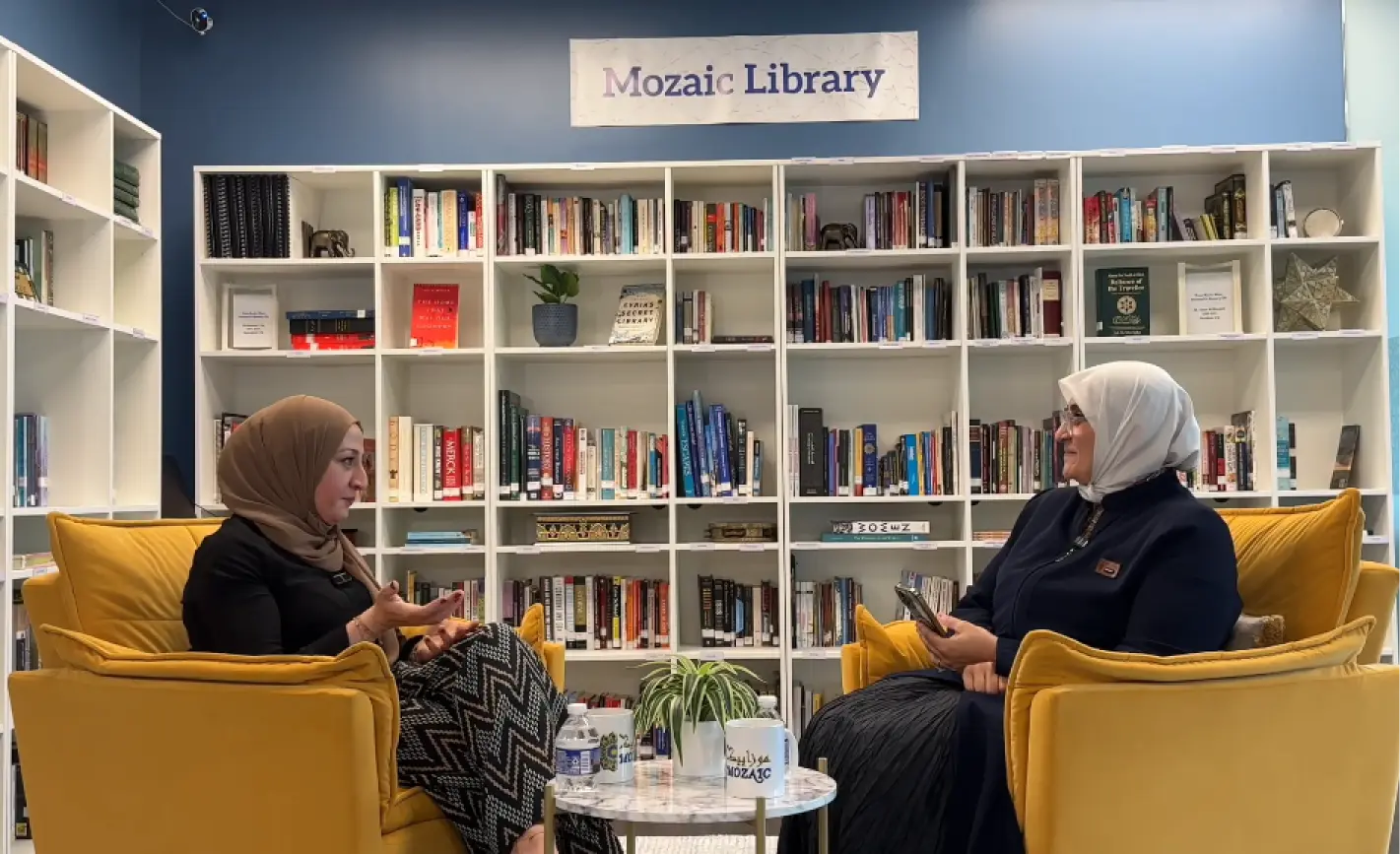
Mozaic Library Review As Long as the Lemon Trees Grow By Zoulfa Katouh Reviewed by

Giving Tuesday Campaign

Mozaic Nutritious Meals of Hope

Your support helps Mozaic provide 2,600 nutritious culturally respectful meals over the next 6 months.